
The Treasury facade at a glance
Al Khazneh is a Nabataean rock-cut facade in pink sandstone. It is not a built temple with walls and a roof, and not a museum complex. The front you see is the cliff face itself. It stands at the end of the Siq, where the gorge opens into a small square.
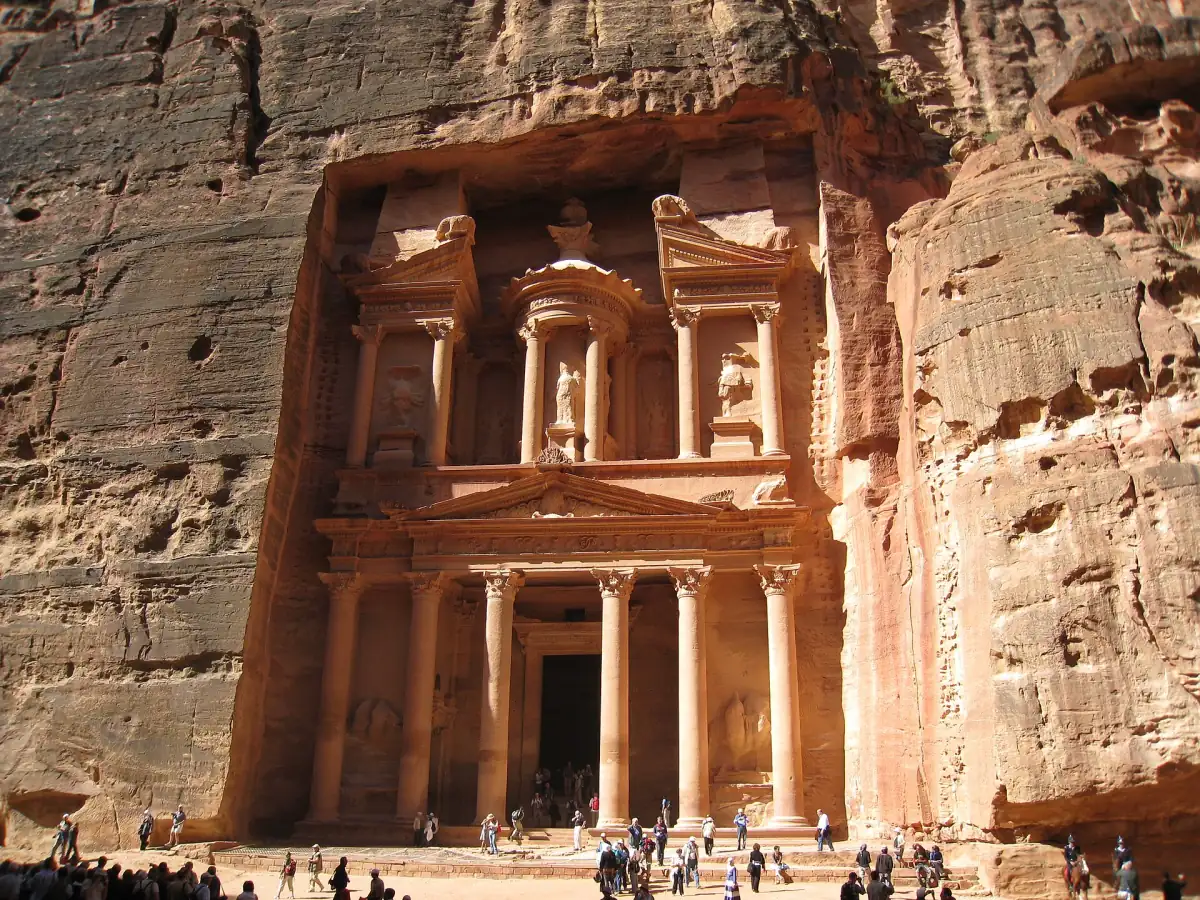
The facade has two levels. The lower level is the large front, and the upper level carries a round structure topped by an urn. If you want to see it with a guide, compare Petra tours to the Treasury before you book.
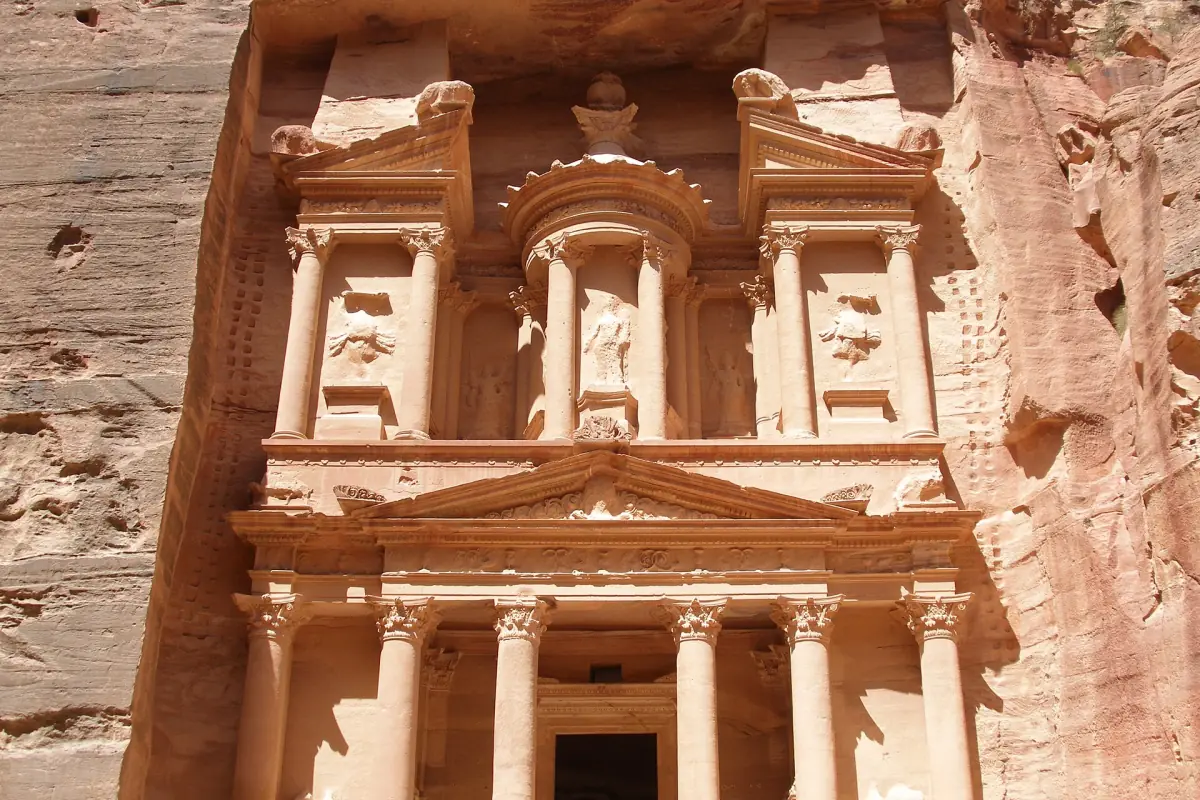
Size and shape
Measurements vary a little, so treat them as a range.
| Measure | Value |
|---|---|
| Height | About 39 to 40 m (39.5 m is the most quoted) |
| Width | About 25 to 30 m |
| Levels | 2 |
| Material | Pink sandstone, carved in place |
| Capitals | Corinthian |
Some measurements give 25.30 m for the width and 39.1 m for the height. Others describe the facade as about 40 by 30 m. The differences are small. The Siq itself is covered in the Siq guide.
Our pick: a private guide at the facade
A private guide can explain the carvings while you stand in front of them.
Hand-picked tours, booked through GetYourGuide. Prices are indicative starting prices in US dollars (as of October 2026). Tap a tour for live availability and the current price in your currency.
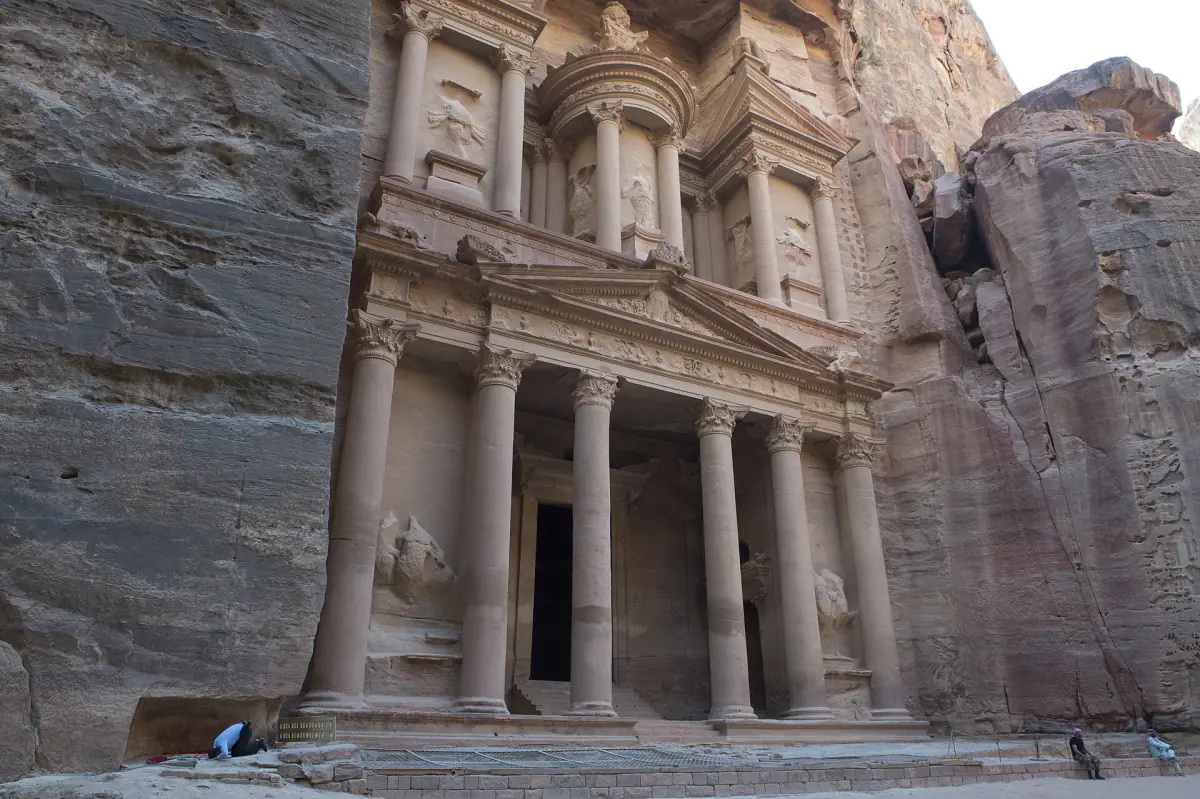
Tours to the Petra Treasury
Guided visits and day trips that reach the Treasury, with live prices and availability.
What you see on the facade
The main features, from the top down.
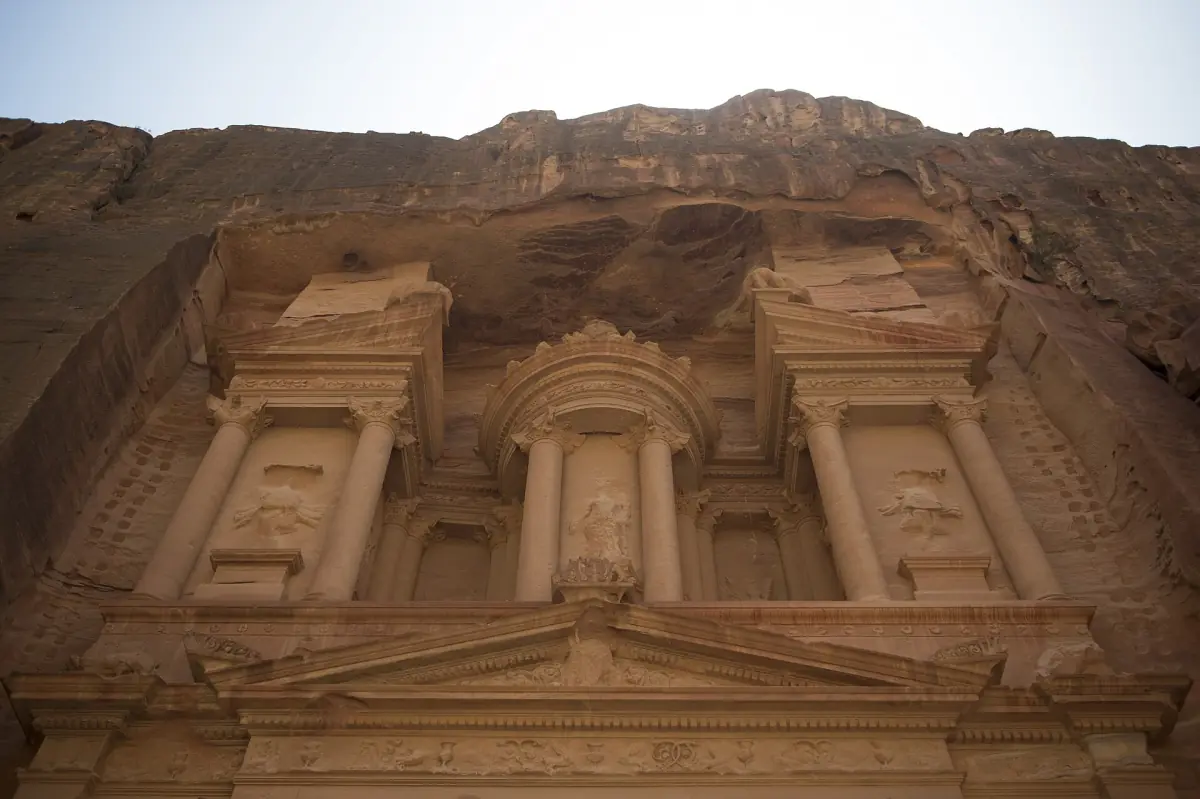
The tholos and the urn
The round structure in the middle of the upper level is the tholos. An urn crowns it. A local legend says a pharaoh hid his treasure in the urn, which explains the popular name "Treasury" (Al Khazneh in Arabic). The legend does not prove an Egyptian treasure or an Egyptian builder.
The half-pediments
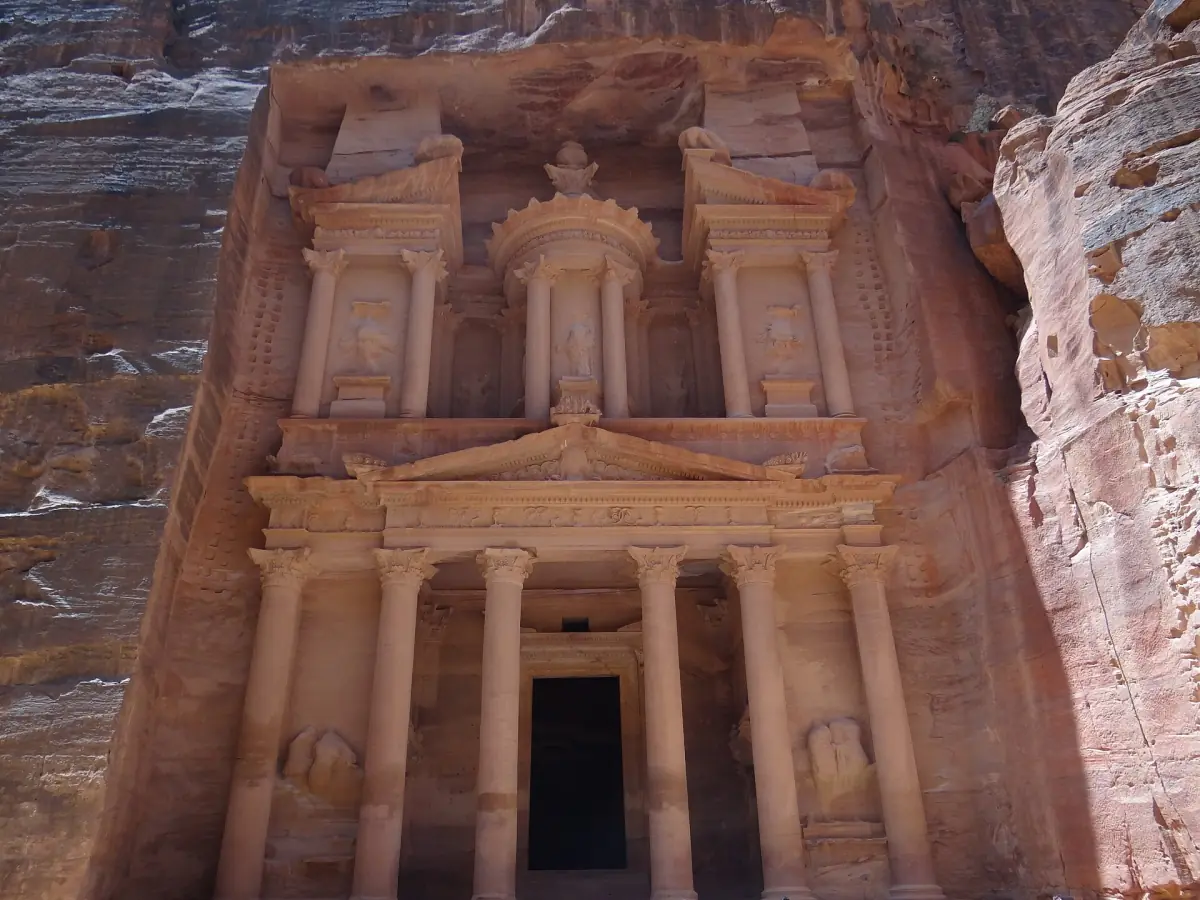
The upper level has half-pediments, as the photo shows. The decoration of the facade, such as the Corinthian capitals, shows Hellenistic influence.
The figures and reliefs
The central female figure is read as the goddess Isis, and the female figures with axes as Amazons. Another reading takes the riders as Castor and Pollux and the central figure as Isis or al-Uzza. These are interpretations, not settled identifications.
The bullet holes
The marks on the urn are explained by attempts to shoot the supposed treasure out of it.
What it was built for
The usual date is the reign of Aretas IV, 9 BC to AD 40, and the likely use is funerary. A wider range of 60 BC to AD 50 also appears, with readings as a royal tomb, a ritual place or an archive. Another view puts it in the 1st century BC under Aretas III. The builder is not settled, so treat each date as an estimate.
Excavations in front of the monument in 2003 found three Nabataean tombs from the end of the 1st century BC. They are read as royal tombs. For the full story see the history of Al Khazneh and the wider Petra background on visitpetra.org.
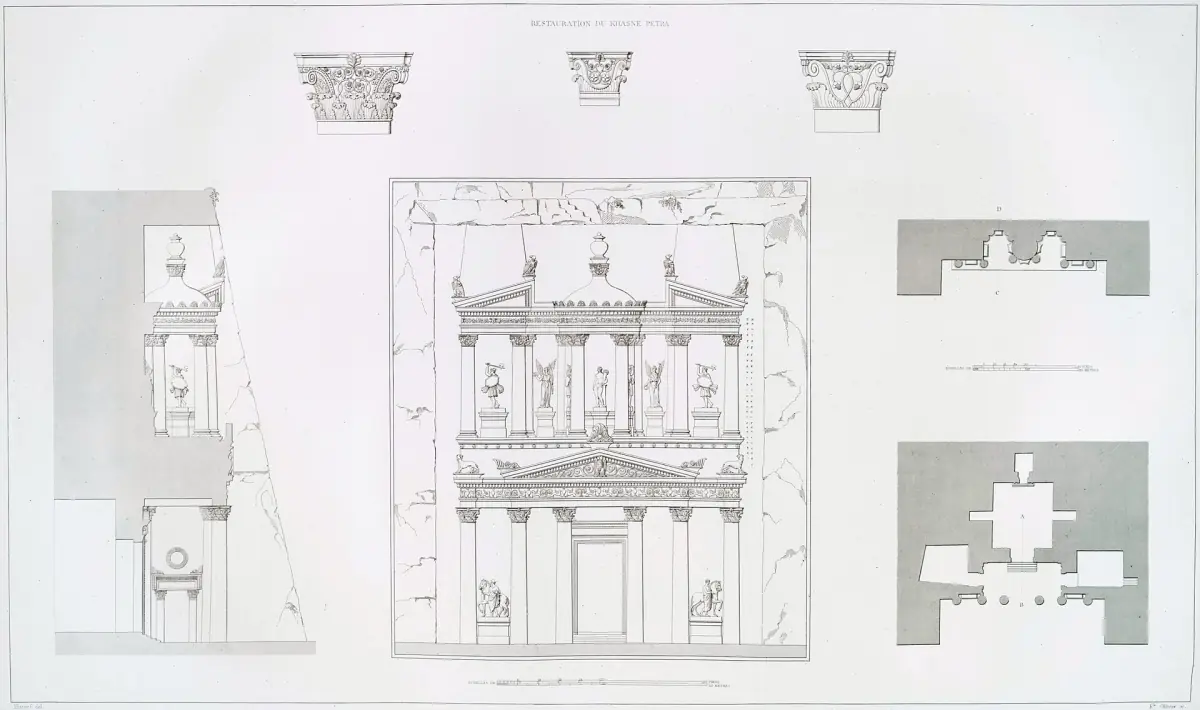
A lithograph from 1830 shows a reconstructed facade and is worth comparing with the real front.
Getting to the facade
The Treasury is at the end of the Siq. From the visitor center the walk takes up to 1 hour depending on pace, and the same back. The Siq is a sandstone gorge a little over 1.2 km long and in places only 3 m wide, so the first view of the facade comes at the end of a narrow walk.
A club car runs to the Treasury for JOD 15 one way or JOD 25 return, bought on site without booking. A horse ride in the park goes only to the start of the Siq, not to the facade. Private pickups are not allowed inside the park. For routes by bus, taxi or car, see how to get to Petra.
Light and the best view
Direct sun reaches the facade at roughly 09:00 to 11:00, and reflected light follows at roughly 17:00 to 18:00. Those are rough windows without month-by-month times. In winter the second one falls after closing: from 2 October 2026 to 1 March 2027 the site is open 06:30 to 17:00, and some ticket terms give 06:00 to 16:00.
The best view from the ground is from the middle of the square. A higher view needs a guided hike. See the viewpoint guide, and the best time guide for the seasons. Entry to the interior is covered under inside the Treasury.
The Treasury facade: frequently asked questions
How tall is the Treasury in Petra?
About 39.5 m. Some measurements give 39.1 m and others about 40 m, so think of it as roughly 40 m with a width of 25 to 30 m.
What is the urn on top of the Treasury?
It crowns the tholos, the round structure on the upper level. A legend says a pharaoh hid his treasure inside, which gave the monument its name. There is no evidence for an Egyptian treasure.
Why are there bullet holes in the urn?
Local tradition explains them as attempts to shoot the treasure out of the urn.
Who built the Treasury?
It is usually dated to the reign of Aretas IV, 9 BC to AD 40, and is thought to be funerary. The exact builder and purpose are not settled.
When is the facade best lit?
Direct sun reaches it at roughly 09:00 to 11:00, and reflected light comes at roughly 17:00 to 18:00. In winter the later window falls after closing.
What are the figures on the facade?
They are read as Isis, Amazons and the twin riders Castor and Pollux. The readings are interpretations.