
What Al Khazneh is
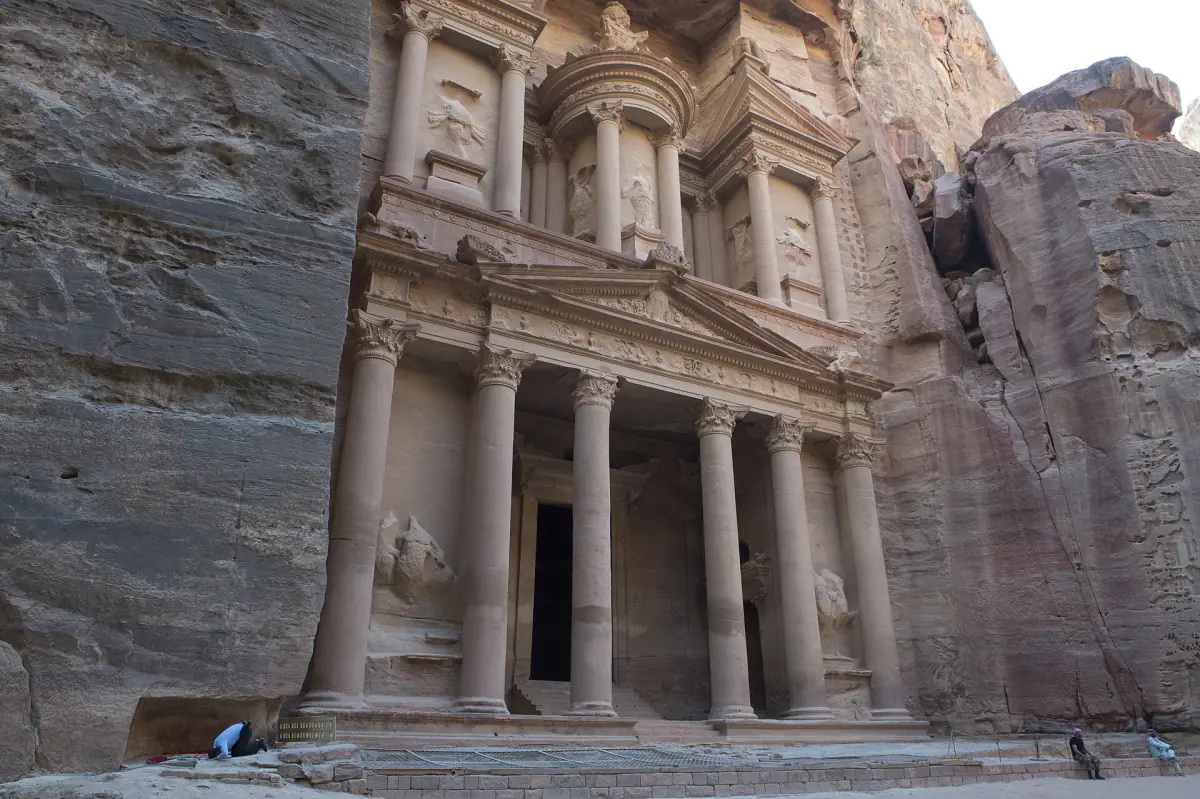
Al Khazneh, also written Al-Khazneh or Al Khazna and known as the Treasury, is a Nabataean facade cut directly into the pink sandstone at the end of the Siq. It is 39.5 m high and divided into two levels. It is not a museum complex but a monument in the rock.
Its date and purpose are not settled. The most common reading places it in the reign of King Aretas IV, from 9 BC to AD 40, and sees a funerary monument. A wider frame runs from 60 BC to AD 50. To walk to it with a guide who explains the layers, look at Petra tours to the Treasury.
Who built it: the readings compared
These are interpretations. None of them is a proven fact.
| Reading | Dating | What it says |
|---|---|---|
| Aretas IV | 9 BC to AD 40 | The most common assignment. A probable funerary function. It is not shown by an inscription to be the king's own tomb |
| Wider frame | 60 BC to AD 50 | A royal tomb, or a religious, ritual or archive-related purpose. The builder is not settled |
| Aretas III | 1st century BC | An older alternative that stays open |
For most visitors, the safe way to say it is this: a Nabataean monument from around the turn of the era, most likely funerary, with the builder still open. Anyone who gives one exact king and one exact purpose as fact is choosing a reading.
The facade and what the figures may mean
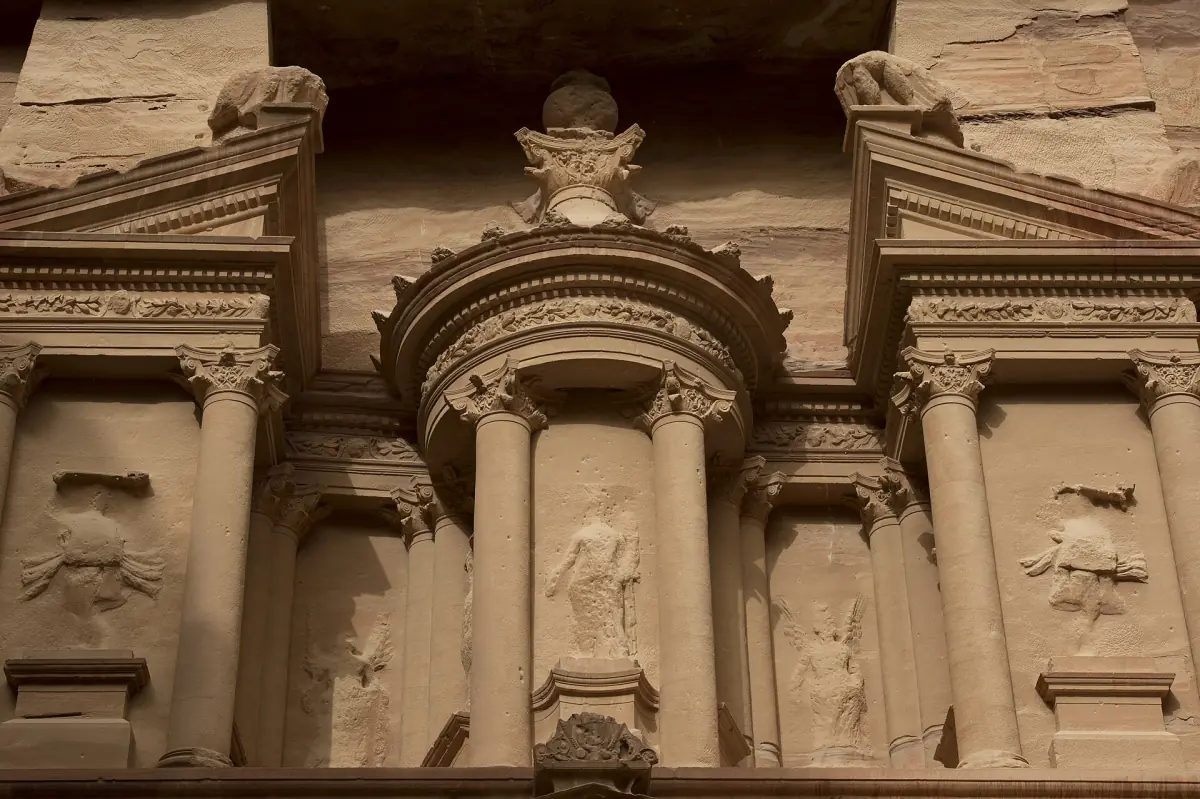
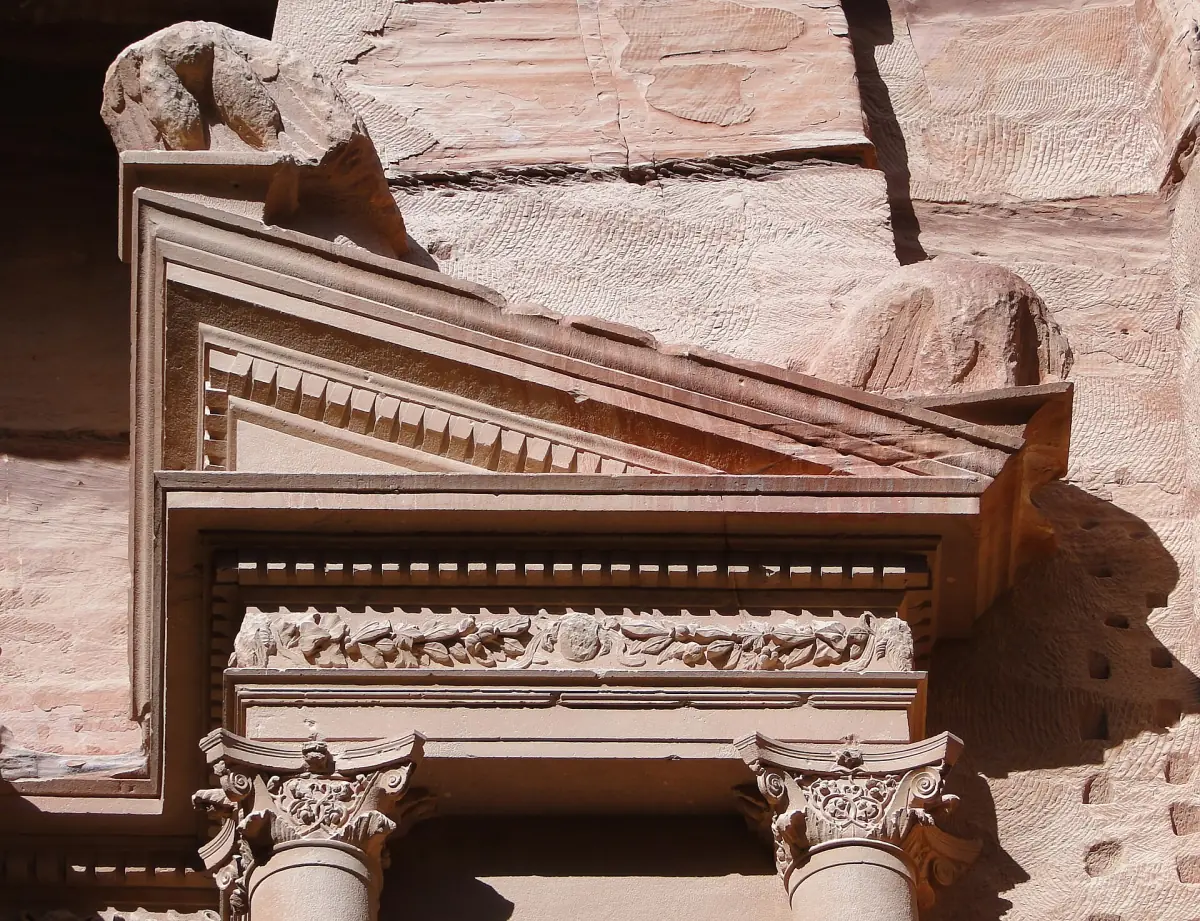
The facade has Corinthian capitals and shows Hellenistic influence. Its figures are interpreted, not identified by inscription. The central goddess is read as Isis, and the female figures carrying axes as Amazons. The riders are read as Castor and Pollux, and the central figure also as Isis or al-Uzza.
On top stands the urn. Read the facade page for the full tour of the decoration.
Our pick: the Nabataean city with a guide
A licensed guide explains the history on the walk from the Treasury to the Monastery.
Hand-picked tours, booked through GetYourGuide. Prices are indicative starting prices in US dollars (as of October 2026). Tap a tour for live availability and the current price in your currency.
Tours to the Treasury
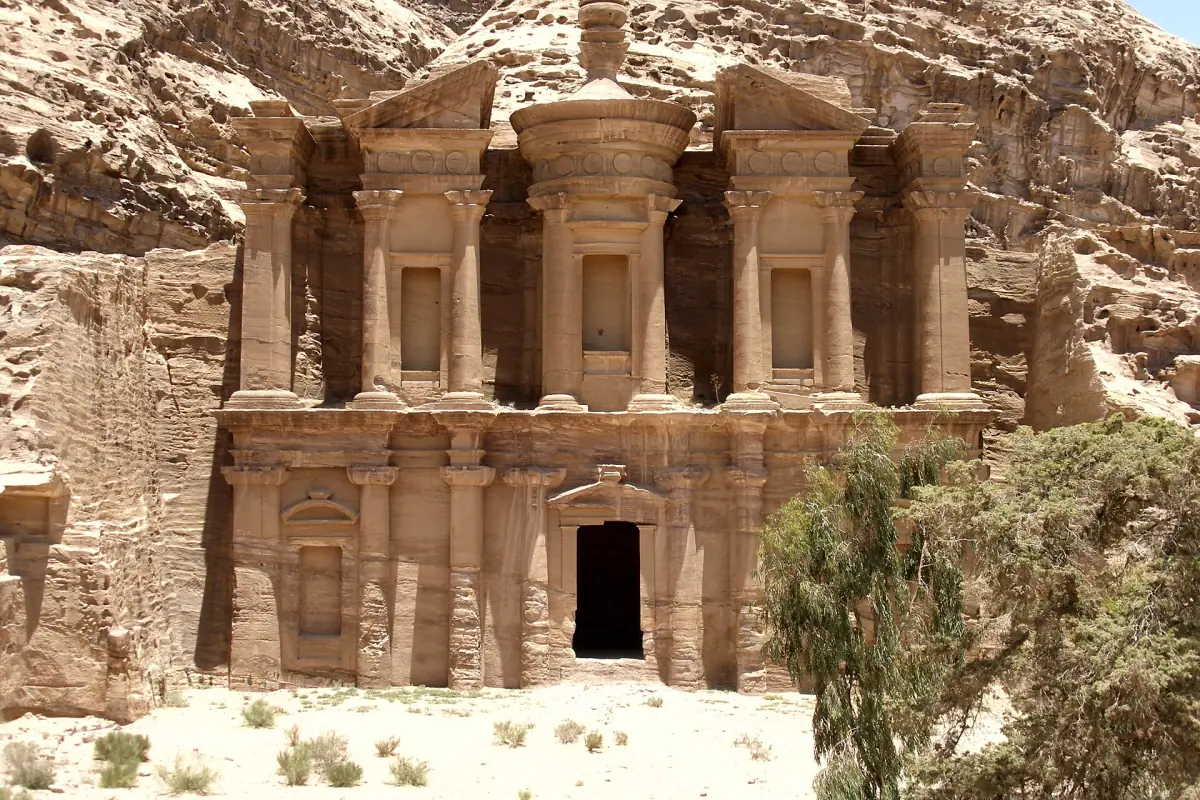
Guided Petra tours to the Treasury, from Amman, Aqaba or Wadi Musa, with live prices and availability.
What the digs found
Two finds shape the picture today.
Three tombs, 2003
In 2003 three Nabataean tombs were found in front of the monument. They date to the end of the 1st century BC. They are read as royal tombs.
A burial chamber, 2024
In 2024 a joint team opened a burial chamber with 12 skeletons under the Treasury. The Department of Antiquities, the Petra authority and ACOR took part. Who these people were is unknown.
Not open to the public
The team worked under a special permit. This does not mean the underground tombs can be visited. See the page inside the Treasury for what you can expect.
The name and the pharaoh legend
The popular name, the Treasury, comes from a legend. It says a pharaoh hid a treasure in the urn on top of the facade. The marks on the urn are explained as bullet holes from attempts to shoot the supposed treasure out.
The legend does not prove an Egyptian treasure, and it does not prove an Egyptian builder. It explains the name, not the monument. The film connection is a later chapter: see Indiana Jones and the Treasury.
The inside
The interior is a plain, large chamber without the rich decoration of the facade. It is often described as three chambers, a central one and one on each side, so do not expect a tour of rooms.
What stays open
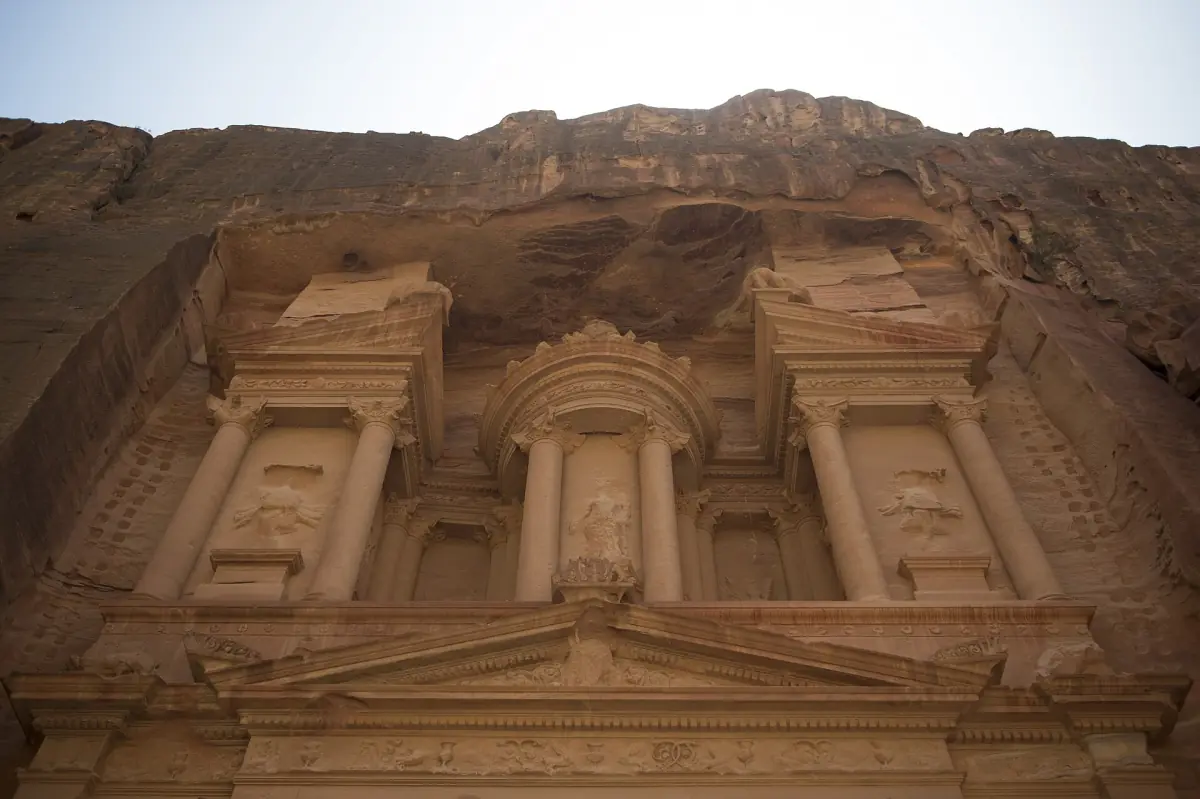
Questions with no final answer.
The exact year
No exact building year is established. Quote a range, not a date.
The builder
Aretas IV is the most common name, but the builder is not settled, and Aretas III stays on the table as an alternative.
The purpose
A tomb is the likely reading. Religious, ritual and archive-related ideas are also put forward.
The burials
Who lay in the chamber under the Treasury is unknown.
Seeing it today
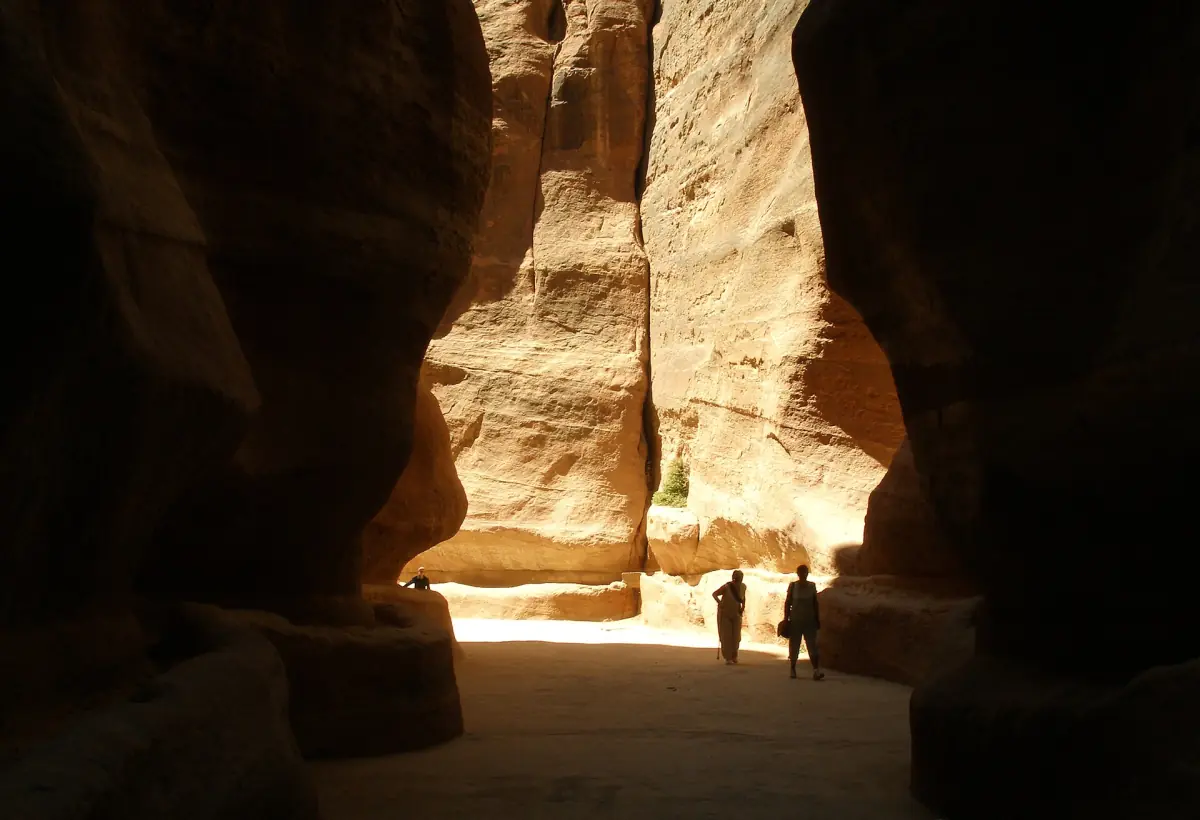
You reach the Treasury on foot through the Siq, up to 1 hour from the Visitor Center. Entry with at least one night in Jordan is JOD 50 for 1 day, JOD 55 for 2 days and JOD 60 for 3 days. Without a night in the country it is JOD 90. Children under 12 enter free during the day. See Petra tickets and Jordan Pass.
The site is open 06:00 to 18:00 until 1 October 2026 and 06:30 to 17:00 from 2 October 2026 to 1 March 2027. Some ticket terms give 06:00 to 16:00 for winter, so plan with the earlier time. Direct sun reaches the facade roughly between 09:00 and 11:00. The best time page has the detail.
For the wider story of the Nabataeans and the city, see the Petra history guide.
Al Khazneh history: frequently asked questions
Who built Al Khazneh?
The most common assignment is King Aretas IV, who ruled from 9 BC to AD 40. The wider frame runs from 60 BC to AD 50, and Aretas III is an alternative. The builder is not settled.
Was the Treasury a tomb?
That is the likely reading, and a royal tomb is one version of it. Religious, ritual and archive-related purposes are also put forward. The purpose is not settled.
Why is it called the Treasury?
A legend says a pharaoh hid his treasure in the urn on the facade. The legend explains the name but does not prove a treasure or an Egyptian builder.
What are the holes in the urn?
They are explained as bullet holes from attempts to shoot the supposed treasure out of the urn.
What was found under the Treasury?
In 2024 a joint team opened a burial chamber with 12 skeletons. Who they were is unknown, and the chamber is not open to visitors.
How high is the Treasury?
The facade is 39.5 m high. Some figures run slightly lower, at about 39 m.